Here are the An efficient method for the synthesis of nickel phosphide nanocrystals via thermal decomposition of single-source precursors journals presenting the latest research across various disciplines. From social sciences to technology, each article is expected to provide valuable insights to our readers.
Abstract
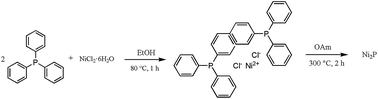
An efficient method was developed for the synthesis of nickel phosphide nanocrystals (NCs) via thermal decomposition of bis(triphenylphosphine)nickel dichloride (BTND) precursor in the presence of oleylamine (OAm) for the first time. The effect of synthetic conditions such as reaction temperature, reaction time and OAm quantity on the size and phase of the as-synthesized nickel phosphide NCs was discussed. The structure and morphology were characterized by X-ray diffraction (XRD), transmission electron microscopy (TEM), X-ray photoelectron spectroscopy (XPS) and N2 adsorption–desorption measurements. The results showed that the size of Ni2P NCs can be controlled by increasing reaction temperature and OAm quantity. The phase of nickel phosphide NCs can be controlled by changing the reaction time. The shorter reaction time was beneficial for forming Ni12P5 NCs, and longer reaction time was beneficial for forming Ni2P NCs. Furthermore, a possible growth mechanism of the as-synthesized nickel phosphide NCs was proposed. These synthetic techniques may be expanded to other metal phosphide materials.
journal:RSC Advances
Authors:Yuan Pan; Yunqi Liu; Chenguang Liu
Published date:--
DOI:10.1039/c5ra00117j
PDF link:http://pubs.rsc.org/en/content/articlepdf/2015/RA/C5RA00117J
Article link:http://dx.doi.org/10.1039/c5ra00117j
Article Source:Royal Society of Chemistry (RSC)。